Subperiosteal implants: a real option when your jaw cannot anchor standard implants
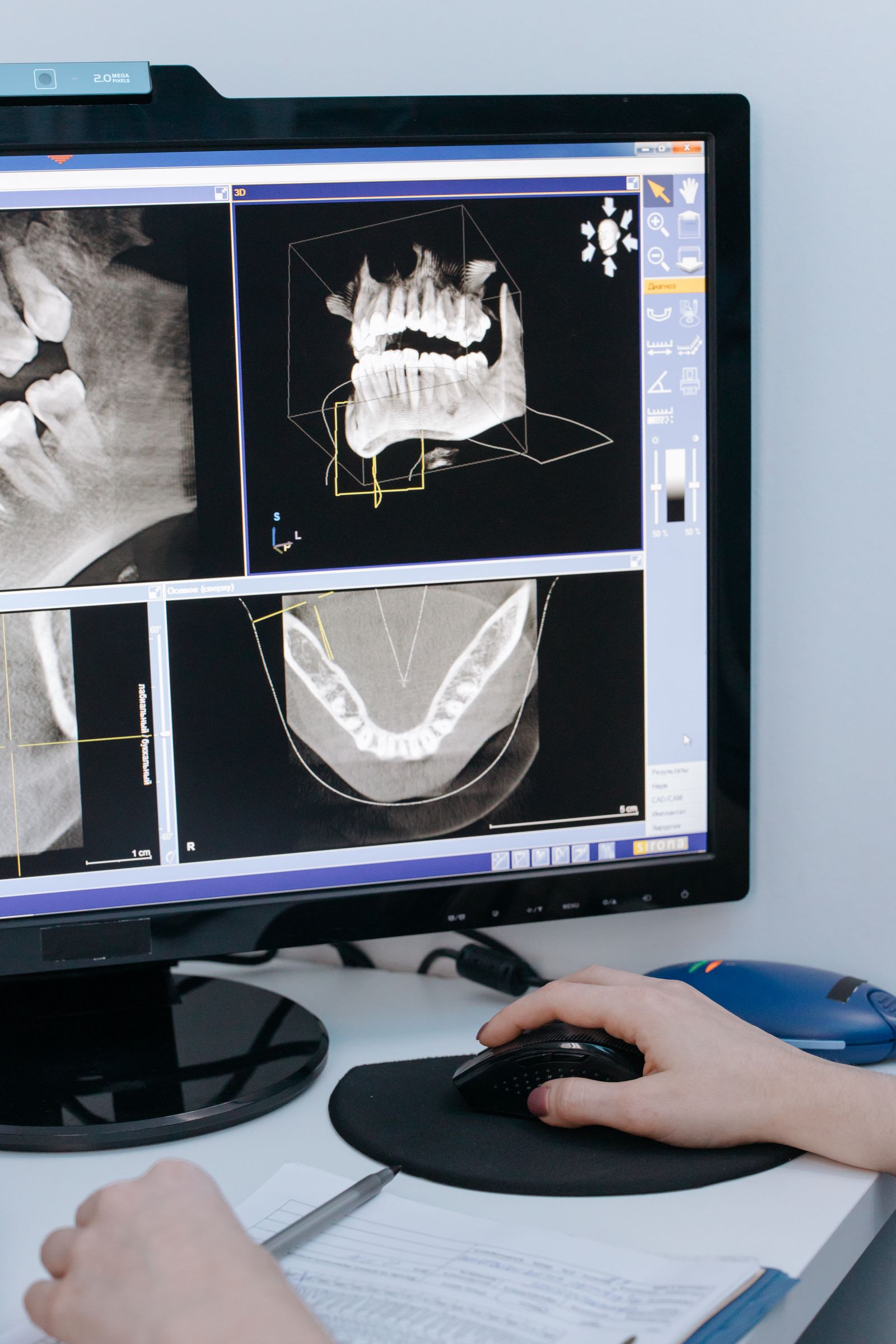
When the alveolar ridge has resorbed past what a graft can rebuild, a custom subperiosteal implant restores the smile that an "All-on-4 not possible" verdict took away.
A woman in her sixties has been told by three different clinics that she "is not a candidate for implants." Her maxilla has 2 to 3 millimetres of residual bone above the sinus floor. Sinus lifting was offered, refused. Zygomatic implants were mentioned and dismissed as too aggressive. She has been wearing a complete upper denture that no longer fits, for six years. She is asking whether anything else exists.
It does. Custom subperiosteal implants are a forgotten option that modern CBCT imaging and 3D printing have brought back into the conversation — and into our surgical day at aiHealth Medical Center. They are not first-line. They are the right answer in a small, specific group of patients for whom standard endosseous implants are biologically impossible.
What a subperiosteal implant actually is
A subperiosteal implant is a custom titanium framework that sits on top of the residual jawbone, underneath the periosteum, with abutment posts emerging through the gum to receive the prosthesis. It does not require drilling into the bone — it embraces it. The framework is designed from a high-resolution CBCT scan (we use Newtom and Fussen Technology AI-assisted CBCT for our planning) and 3D-printed in medical-grade titanium so it fits the patient's own bony anatomy at the micron level. The classical 1940s and 1950s subperiosteal designs failed because they were hand-bent on plaster models — Bodine and Yanase's long-term data showed loosening and tissue dehiscence at unacceptable rates. The modern CAD/CAM versions, planned on volumetric imaging, are a different device.
 A subperiosteal framework sits over the residual ridge — design happens entirely on the CBCT before the patient enters the surgical room.
When it is the right answer
The honest indication is a severely atrophic maxilla — Cawood & Howell class V or VI — where there is insufficient bone for a standard implant, the patient has already declined or failed sinus augmentation, and zygomatic implants are either anatomically problematic or refused. For this small group, a custom subperiosteal implant restores a fixed dentition without grafting. In the more recent literature (Mommaerts, Int J Oral Maxillofac Surg, 2017, and following case series) the survival rate with modern CAD/CAM frameworks is reported above 90% at five years, with the dominant failure mode being soft-tissue dehiscence rather than mechanical failure.
When it is the wrong answer
It is the wrong answer if you have enough bone for standard implants, plain and simple. It is also the wrong choice if your soft tissue is thin, mobile, or unable to heal over a metal framework — heavy smokers, uncontrolled diabetes, or a history of radiotherapy to the jaws push us hard towards alternatives. The bigger risk is using subperiosteal as a shortcut to avoid the longer planning of grafting, sinus lifting, or zygomatic placement when those are genuinely feasible. In our practice we walk every patient through CBCT-based alternatives first and reserve the subperiosteal path for the cases that truly need it.
What this means for a patient in the UAE
If you have been told you "cannot have implants" without anyone offering you a CBCT-based second opinion, that verdict is incomplete. AED 35,000 to AED 80,000 per arch is a realistic range for a custom subperiosteal case in Sharjah, depending on the framework complexity and the prosthetic design — meaningfully more than a routine implant case, less than a full zygomatic reconstruction. Daman and Thiqa do not cover implant work, so this is an out-of-pocket conversation. Bring any CBCTs you already have to the consultation; sometimes the answer is hiding in a scan that someone else dismissed too quickly.
About the author
Dr Ahmed Abou Foul
Specialist Periodontist · aiHealth Medical Center
ImplantsSubperiostealRegenerativeCBCT planningView profile →Read more articles on the dental health blog, or book an appointment.