Flossing versus interdental brushes: which one your mouth actually needs
If your gums bleed every time you floss, the floss probably is not the problem. Here is how to choose between floss and interdental brushes.
A woman in her forties asks me, almost apologetically, whether she should keep flossing. She has been told for thirty years that she must, and for thirty years her gums have bled every time she does. She has read the headlines that say flossing does not work. She would like to stop.
She is asking the wrong question. The right question is: what is actually getting in between your teeth, and what tool removes it cleanly? The honest answer in most adult mouths over 35 is not floss. It is interdental brushes. But not always. Here is how to choose.
What floss does, and what it does not
Floss is a thin, flexible filament designed to slip between teeth that are touching tightly and sweep biofilm off the proximal surfaces. When the contact point is intact and the gum tissue fills the embrasure space, floss is the correct tool. It is the only tool that fits without damaging the papilla. The Cochrane review (Sambunjak et al., 2011) is often quoted as evidence that flossing "does not work," but what the review actually concluded was that flossing produces a small but consistent reduction in gingivitis when used correctly. The headline was misleading; the data is fine.
 The right tool depends on the space — floss for tight contacts, interdental brushes for anything you can see daylight through.
What interdental brushes do that floss cannot
Once you have any recession, any periodontal pocket, any space wide enough to see between the teeth in a mirror, floss cannot reach the surfaces that matter. The proximal tooth surfaces become concave at the cementoenamel junction, and the root surface is grooved. A floss filament rides over those concavities and grooves; it does not clean them. An interdental brush — a small nylon-filament cone on a wire — slides into the space and physically scrubs both root surfaces in one motion. Studies by Slot et al. (Int J Dent Hyg, 2008) and the more recent review by Worthington et al. (Cochrane, 2019) consistently show interdental brushes outperform floss for reducing both plaque scores and bleeding in patients with any visible interdental space.
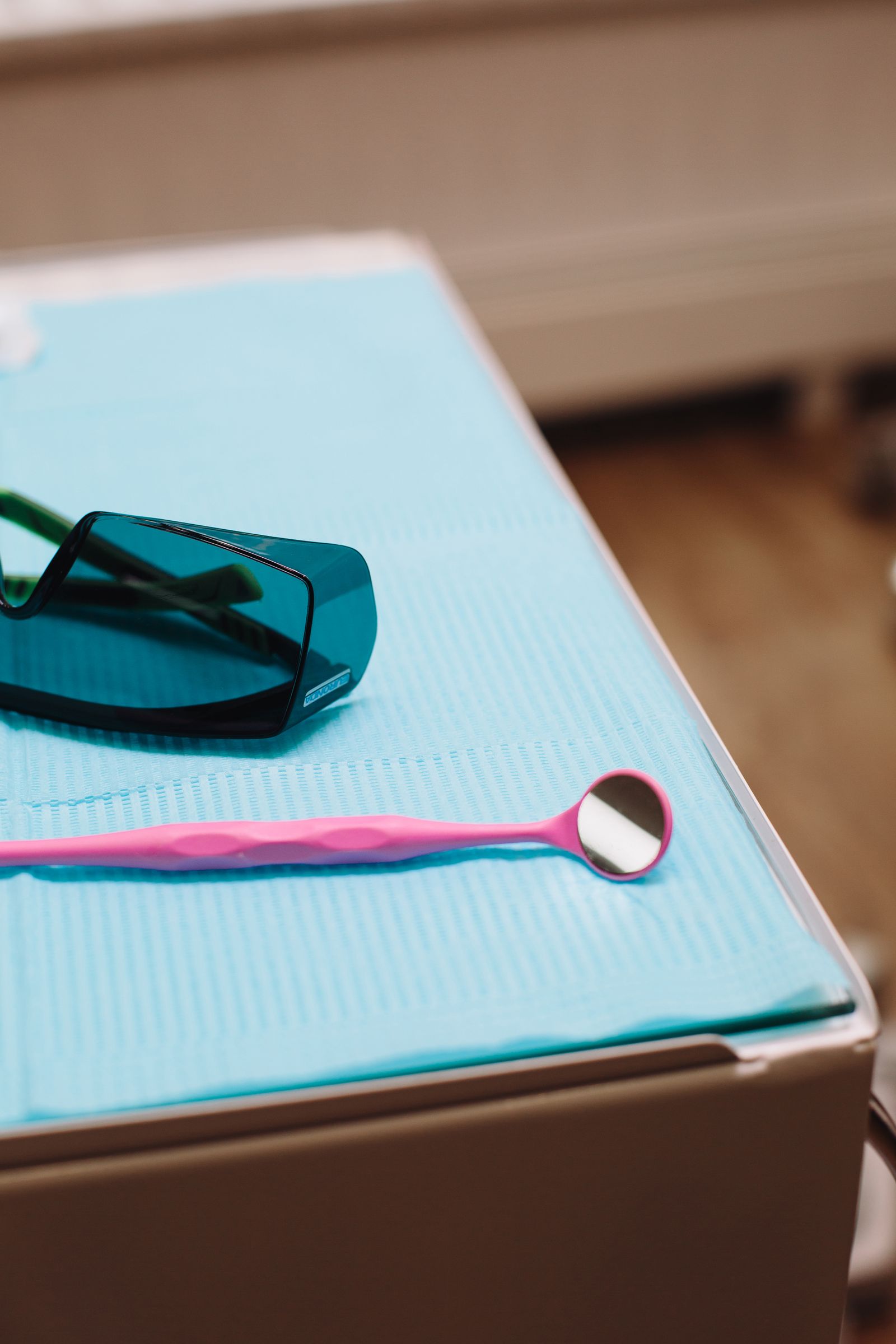
In our clinic we keep four sizes of TePe interdental brushes at the chair (0.4 mm, 0.5 mm, 0.6 mm, 0.7 mm) and a small mirror. At your hygiene visit we will hold the mirror up, slide brushes into your actual spaces, and tell you which sizes belong in which gaps. Most adults need two sizes — a smaller one for the front teeth, a larger one for the back.
If your gums bleed, that is information
Bleeding is not a sign you should stop. It is the body telling you that biofilm has been sitting in that space long enough to inflame the tissue. Whether you are using floss or an interdental brush, the bleeding typically stops within seven to ten days of consistent daily cleaning — once you have actually removed the trigger. If it does not, the issue is likely below the gum line and we need to see you.
What this means in practice
If you are under 30 with tight contacts and healthy papillae, floss once a day before bed. If you are over 35, have ever had a deep cleaning, or can see a triangle of space between any two teeth in the mirror, switch to interdental brushes. Use them once a day, always at the same time so you do not forget. Do not use both unless we have specifically told you to — duplicating the work does not double the benefit. A pack of TePe brushes costs around AED 35 at most pharmacies in Sharjah and lasts about six weeks. Book a hygiene visit if you want us to size them for you in person.
SOAbout the author
Dr Sara Odeh
General Dentist · aiHealth Medical Center
GeneralHygienePreventionView profile →Read more articles on the dental health blog, or book an appointment.