Dental Crowns in Sharjah: When You Need One and What to Expect
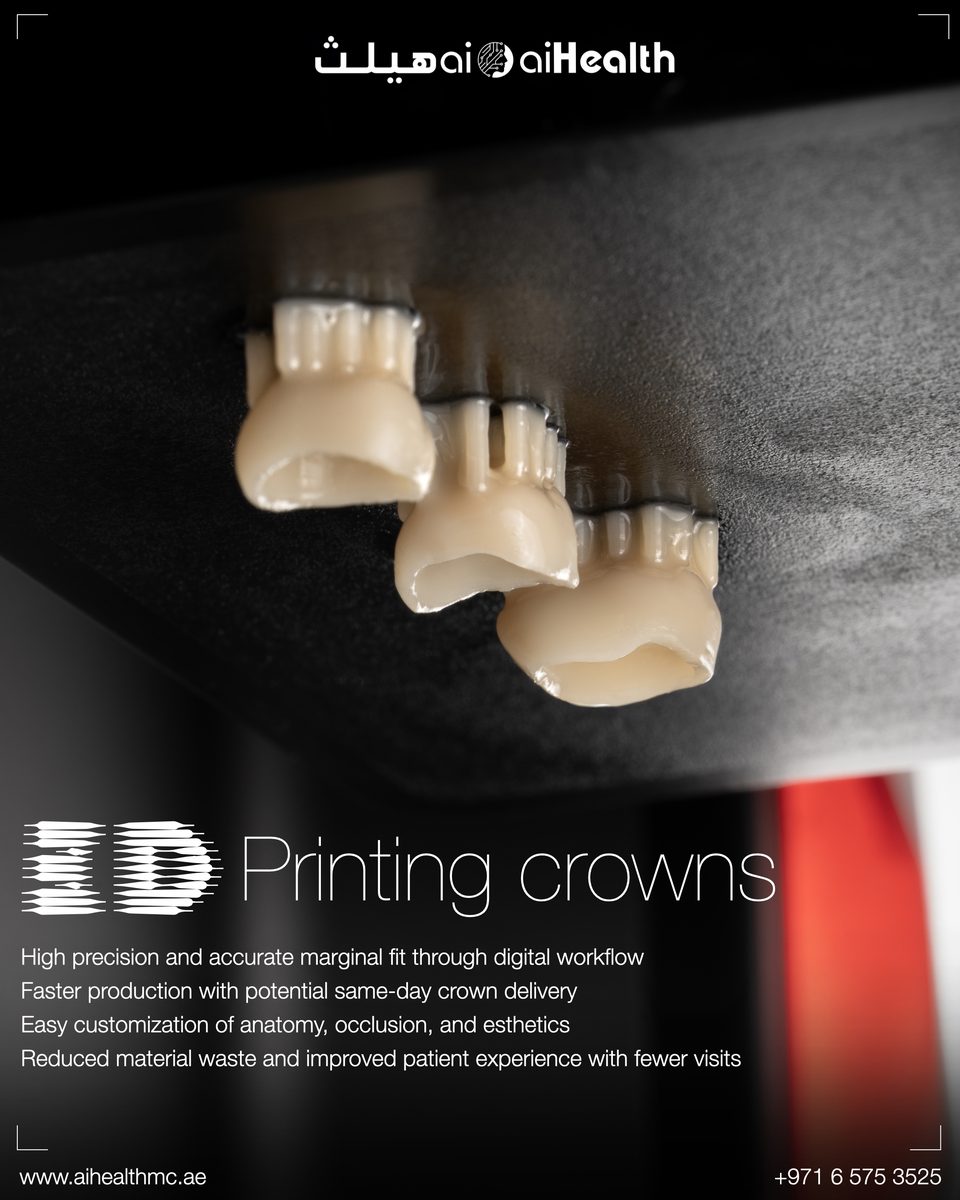
Dental crowns in Sharjah, explained: when you need one, zirconia vs porcelain, the two-visit process, cost factors and aftercare — aiHealth Medical Center.
Dental Crowns in Sharjah: When You Need One and What to Expect
A dental crown is a full-coverage cap, bonded over a prepared tooth, that restores its strength, shape and appearance when the tooth can no longer hold a filling. You typically need one after a root canal, when a tooth is cracked, when a large filling has failed, or to complete a dental implant. At aiHealth Medical Center in Sharjah, crowns are planned with modern imaging and placed to match your natural teeth — and the process is explained to you, in writing, before it begins.
What a Dental Crown Is and What It Does
Think of a crown as armor for a weakened tooth. A filling sits inside a tooth and works when enough healthy structure remains; a crown surrounds the tooth and carries the chewing forces itself. Crowns are made to match the shade and contour of your neighboring teeth, so visually they disappear into the smile. They are the standard of care in three situations: a tooth structurally weakened by decay or a big filling, a tooth that has had root canal treatment, and as the visible part attached on top of an implant.
Five Signs You May Need a Crown
- A tooth cracks or hurts when you bite — especially a sharp release pain on chewing, which can mean a crack is propagating.
- A large or repeatedly repaired filling — a tooth that has been filled multiple times has thin walls that fracture around the filling.
- You just finished a root canal — a root-treated tooth is more brittle and usually needs the protection of a crown. See Root Canal Treatment in Sharjah: What to Expect.
- Severe wear or erosion — teeth worn down by grinding or acidic erosion lose height and strength.
- An implant is being restored — the implant replaces the root; the crown is the tooth you see and use. Our dental implant patient guide covers that pathway.
Crown After a Root Canal: Why It's Usually Recommended
After root canal treatment the tooth is sealed and pain-free, but it is also drier and more brittle than a living tooth. Back teeth especially carry heavy chewing loads, and an unprotected root-treated tooth can split — often years later, and a vertical split usually means losing the tooth entirely. Placing a crown after root canal treatment is how the investment in saving the tooth is protected for the long term. Front teeth with minimal structure loss may be restored more conservatively; the assessment is tooth by tooth.
Types of Crowns: Zirconia, Porcelain, Ceramic and Metal
- Zirconia — extremely strong, tooth-colored, suitable for back teeth and grinders; the most common modern choice.
- Porcelain-fused-to-metal (PFM) — strong with a natural look, though a dark metal line can show at the gum over time.
- Full porcelain / ceramic (e.g. E-max type) — the best aesthetics for front teeth where appearance outranks raw strength.
- Gold / metal alloy — very kind to opposing teeth and extremely durable, but visible; rarely chosen in the UAE for aesthetic teeth.
The right material depends on which tooth, your bite, and your priorities — the consultation ends with a specific recommendation, not a menu you have to decode alone.
The Crown Process at aiHealth Medical Center: Two Visits Explained
Visit one — preparation. The tooth is numbed completely (the same comfort-first standard as every procedure in the clinic — see Painless Wisdom Teeth Extraction in Minutes by Dr. Ahmed Abou Foul for how that protocol works). The tooth is shaped to make room for the crown, an impression or digital scan records the exact preparation, the shade is matched to your neighboring teeth, and a temporary crown protects the tooth while the final crown is crafted.
Visit two — fitting. The temporary is removed, the final crown is tried in: contact, bite and appearance are checked with you looking at it in the mirror. Only when you and the dentist are satisfied is it permanently cemented. Most patients describe the whole process as easier than they expected — both visits are comfortable and relatively short.
How Long Do Crowns Last?
A well-made, well-maintained crown commonly serves for many years — often a decade or considerably more. Its lifespan depends on the material, your bite forces, and above all your hygiene: a crown cannot get a cavity on its surface, but the tooth at its margin can. Brush and floss the crown margin like any other tooth, wear a night guard if you grind, and attend regular check-ups so any margin problem is caught while it is still small.
Dental Crown Cost in Sharjah: What Affects the Price
Crown pricing varies with the material chosen (zirconia and premium ceramics differ from PFM), the tooth being restored, and any supporting work the tooth needs first — a build-up, a post, or gum treatment. You will receive a written plan with the full cost after examination and imaging, before anything begins — the same rule that applies across aiHealth Medical Center. Patients with insurance: crown work is frequently covered in part, and the front desk will check your plan and any pre-approval before treatment starts.
FAQ: Real Questions About Dental Crowns in Sharjah
How long does getting a crown take?
Two visits: the preparation visit, then a fitting visit after the crown is crafted. Each visit is comfortable and relatively short; between them you wear a natural-looking temporary.
Does getting a crown hurt?
No — the tooth is fully numbed before any preparation, exactly as with any other procedure in the clinic. You feel vibration and pressure, not pain. Mild sensitivity for a day or two after each visit is normal.
How much does a dental crown cost in Sharjah?
It depends on the material, the tooth, and any preparatory work needed. aiHealth Medical Center gives you a written plan with the full cost after the examination — before treatment starts, with no surprises.
Zirconia or porcelain crown: which is better?
Neither is universally better. Zirconia is the strength leader and suits back teeth; full ceramic gives the finest front-tooth aesthetics. The recommendation depends on which tooth is being crowned and how you bite.
Can a crown come off, and what do I do if it does?
Rarely, and usually years later from cement washout or grinding forces. Keep the crown, avoid chewing on that side, and call the clinic the same day — a crown can often be re-cemented quickly if the tooth underneath is intact.
A tooth that needs a crown does not get stronger by waiting. Book a crown assessment at aiHealth Medical Center, Sharjah — a clear diagnosis, a written plan, and a tooth that stays yours.
Read more articles on the dental health blog, or book an appointment.