White or silver fillings: what we actually use at AIHMC, and why
Composite, glass ionomer, amalgam — the choice is not aesthetic preference. It is about the tooth, the patient, and the bite.
A father brings his nine-year-old in. He has heard that "silver fillings cause autism," that "white fillings fall out in kids," and that "you should not put anything in a baby tooth because it will fall out anyway." None of those statements is correct. All of them affect the decision he is about to make for his son.
Patients in Sharjah ask me about filling materials almost every day, and the framing is almost always wrong. The right question is not "which colour" or "which is healthier." It is: what does this specific tooth, in this specific mouth, in this specific patient, actually need?
The three materials that matter in 2026
In a modern general practice we work with three materials for direct restorations. Composite resin — tooth-coloured, bonded to the cavity walls, cured with a blue light — is the workhorse for almost every adult restoration we do. Glass ionomer cement (and resin-modified glass ionomer) releases fluoride, bonds chemically without etching, and is forgiving in a wet field. It is our material of choice for many primary teeth and for cervical lesions. Dental amalgam — the "silver" filling — is still legal in the UAE for adults, but the Minamata Convention has phased it out for children, pregnant patients, and breastfeeding mothers. At aiHealth Medical Center we no longer place new amalgams. We do, however, replace failed ones safely under rubber dam isolation when they fracture or leak.
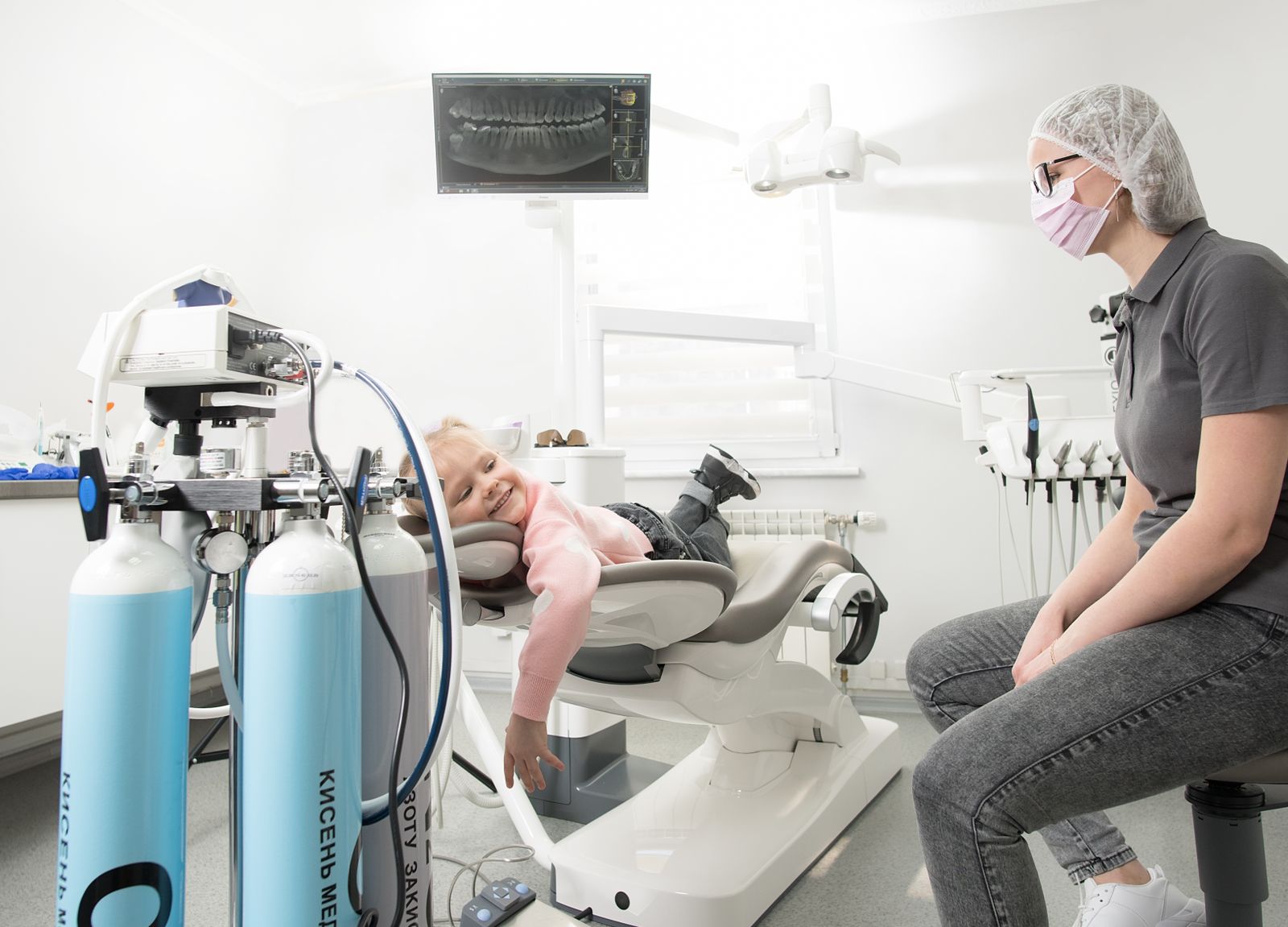
 For paediatric posterior cavities we lean on glass ionomer and bonded composite — both can be placed with minimal preparation.
When composite is the right answer
Composite is the right answer for the overwhelming majority of small to medium cavities in permanent teeth, in patients who can tolerate the 20 to 40 minutes of careful isolation it demands. Modern bulk-fill composites (we use 3M Filtek One and similar) cure to 4 mm in a single increment, which has shortened our chair time considerably for posterior cases. The bond is reliable as long as the field stays dry, and the aesthetic result is good enough that most patients cannot identify which tooth was restored.
Composite is not the right answer in three situations. When the cavity extends sub-gingivally and we cannot keep the margin dry. When the patient is a young child who cannot sit still long enough for the bonding protocol. And when a tooth has lost more than two cusps — at that point the restoration belongs in a lab as a ceramic onlay, not freehand at the chair.
When glass ionomer earns its place
Glass ionomer is the most under-appreciated material in general dentistry. It releases fluoride, it bonds chemically to enamel and dentine without etching, and it does not require a perfectly dry field. For a wriggling six-year-old with a Class I cavity in a lower molar, a resin-modified glass ionomer placed in two minutes is often a kinder and more durable choice than a forty-minute composite under partial isolation. The Cochrane review on restorative materials in primary teeth (Dias et al., 2018) found no clinically significant difference in survival between glass ionomer and composite in children when placement conditions were honest about the case.
What this means for parents and adults
When you are quoted a filling, ask which material the dentist plans to use and why. If the answer is "composite because it looks better" without a discussion of cavity size, isolation, and bite forces, you are getting a finish, not a plan. AED 250 to AED 700 is a reasonable range for a posterior composite in Sharjah depending on size and the practice. Daman and Thiqa typically cover one to two fillings per year under the dental annex — worth checking before you book. Most insurances do not differentiate between composite and amalgam at the reimbursement level, so the cost difference is borne by the practice, not the patient.

About the author
Dr Hajir Al-Khazraji
General Dentist & Dentist-in-Charge · aiHealth Medical Center
PaediatricGeneralCalm carePreventionView profile →Read more articles on the dental health blog, or book an appointment.