Cleaning vs Polishing: What Actually Happens at Your Hygiene Visit
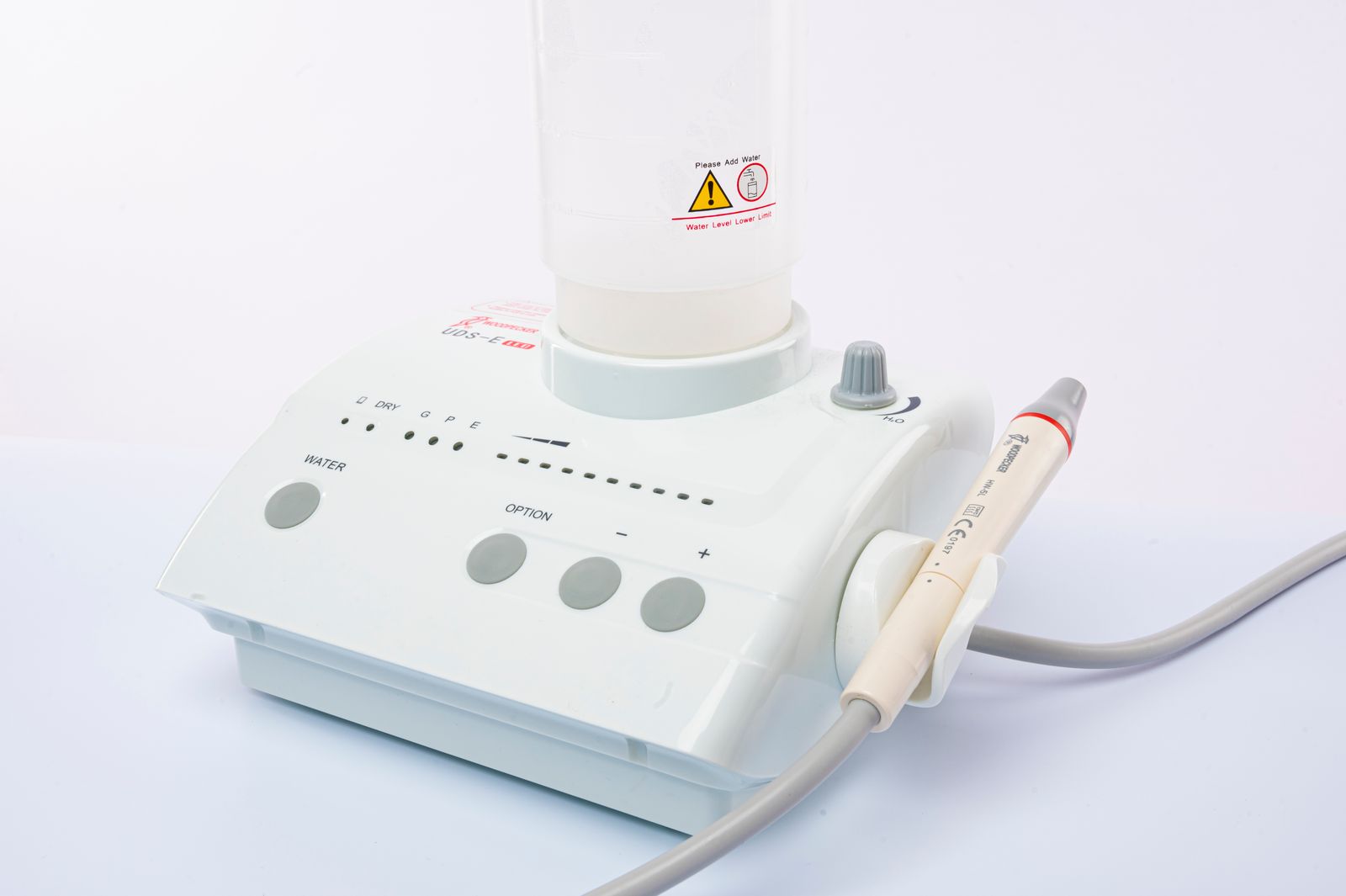
Scaling is not polishing. Polishing is not whitening. Here is what each step at a hygiene visit actually does — and what it cannot do.
A patient sat down last Thursday and asked me to skip the scaling because she had already had a polish at home with a kit she ordered online. She had spent AED 280 on a rotating cup and a tube of paste. She still had calculus the thickness of a fingernail behind her lower incisors.
This is the confusion I want to clear up. Cleaning is not polishing. They are different procedures, with different tools, and they do different things.
What scaling actually removes
Scaling — the part of a hygiene visit that requires an instrument — removes calculus and biofilm from tooth surfaces above and below the gum line. Calculus is mineralised plaque. Once it has hardened onto enamel or cementum, no brushing, mouthwash, or polishing paste will shift it. It needs to be physically broken off.
I use an ultrasonic scaler with a fine tip at the gum margin and inside shallow pockets, followed by hand instruments — Gracey curettes — for any residual deposit, particularly on the lingual surfaces of the lower incisors and the distal of the upper second molars. Those are the two places I find calculus on almost every adult patient who has not been to a hygienist in over a year.
The Cochrane systematic review on routine scaling and polishing, updated in 2018, found that regular scaling reduces gingival inflammation and probing depths in patients with chronic gingivitis. It does not reverse periodontitis on its own, but it is the foundation that everything else sits on.
What polishing actually does
Polishing is what happens after scaling. A rubber cup with a low-abrasivity prophylaxis paste is used to smooth the tooth surface and remove residual extrinsic stain — coffee, tea, smoking, strong spice pigments. It is cosmetic. It is not a deep clean. And it cannot remove calculus.
Polishing should be selective, not whole-mouth on every visit. Pasted polishing on healthy enamel removes a microscopically thin layer of the outer surface. Done weekly it would wear the tooth. Done once or twice a year on stained surfaces only, it is fine.
For heavy extrinsic stain we use air-polishing with a low-abrasivity erythritol powder, which is gentler than traditional sodium bicarbonate and safe on most exposed root surfaces — though I avoid it on patients with respiratory disease or sodium-restricted diets.
What polishing is not
Polishing is not whitening. Whitening uses carbamide peroxide or hydrogen peroxide to lighten the intrinsic shade of the dentine through the enamel. Polishing only removes surface stain. If your teeth have darkened with age or after years of coffee, no amount of polishing will change the underlying shade. That is a separate conversation about whitening — and we will only whiten teeth on healthy, scaled gums, never the reverse.
The structure of a proper hygiene visit
At our clinic a full hygiene visit takes 45 to 60 minutes. The order is:
- Medical history check and blood pressure if indicated
- Full extraoral and intraoral soft-tissue exam — looking for ulcers, leukoplakia, anything unusual
- Six-point periodontal probing on every tooth, recorded in millimetres
- Disclosing dye, if needed, to show the patient where plaque is sitting
- Ultrasonic and hand scaling, quadrant by quadrant
- Selective polishing on stained surfaces only
- Fluoride varnish — 22,600 ppm sodium fluoride — on patients at moderate caries risk
- Technique calibration: brushing, interdental sizing, recall interval
What it should cost and what insurance covers
A standard hygiene visit across Sharjah typically runs AED 350 to AED 700, depending on whether it is a basic prophylaxis or a deeper scaling for a patient who has not been seen in years. Daman Basic and most Thiqa plans cover one to two hygiene visits per year for adults, and additional visits when the periodontal chart justifies them. We submit the chart with the claim so the insurer can see why.
How often should you come
The honest answer is: it depends on your risk. For low-risk adults with no bleeding and stable gums, every six months is enough. For patients with previously treated periodontitis, every three to four months for the rest of their life — Renvert and Persson's work on maintenance shows that the patients who skip recall are the patients who lose teeth a decade later.
You can read more about our hygiene and prevention pathway on our services page, and if you would like me to look at your chart and tell you honestly what interval suits you, come in for a hygiene visit — it is the cheapest dentistry there is.
SOAbout the authorDr. Sara OdehGeneral Dentist · aiHealth Medical Center · Sharjah, UAEGeneral DentistryHygiene & PreventionPatient EducationView profile →If it has been more than a year since your last hygiene visit, Book a consultation at aiHealth Medical Center in Sharjah.
Read more articles on the dental health blog, or book an appointment.