Your Child's First Dental Visit: A Calm Beginning
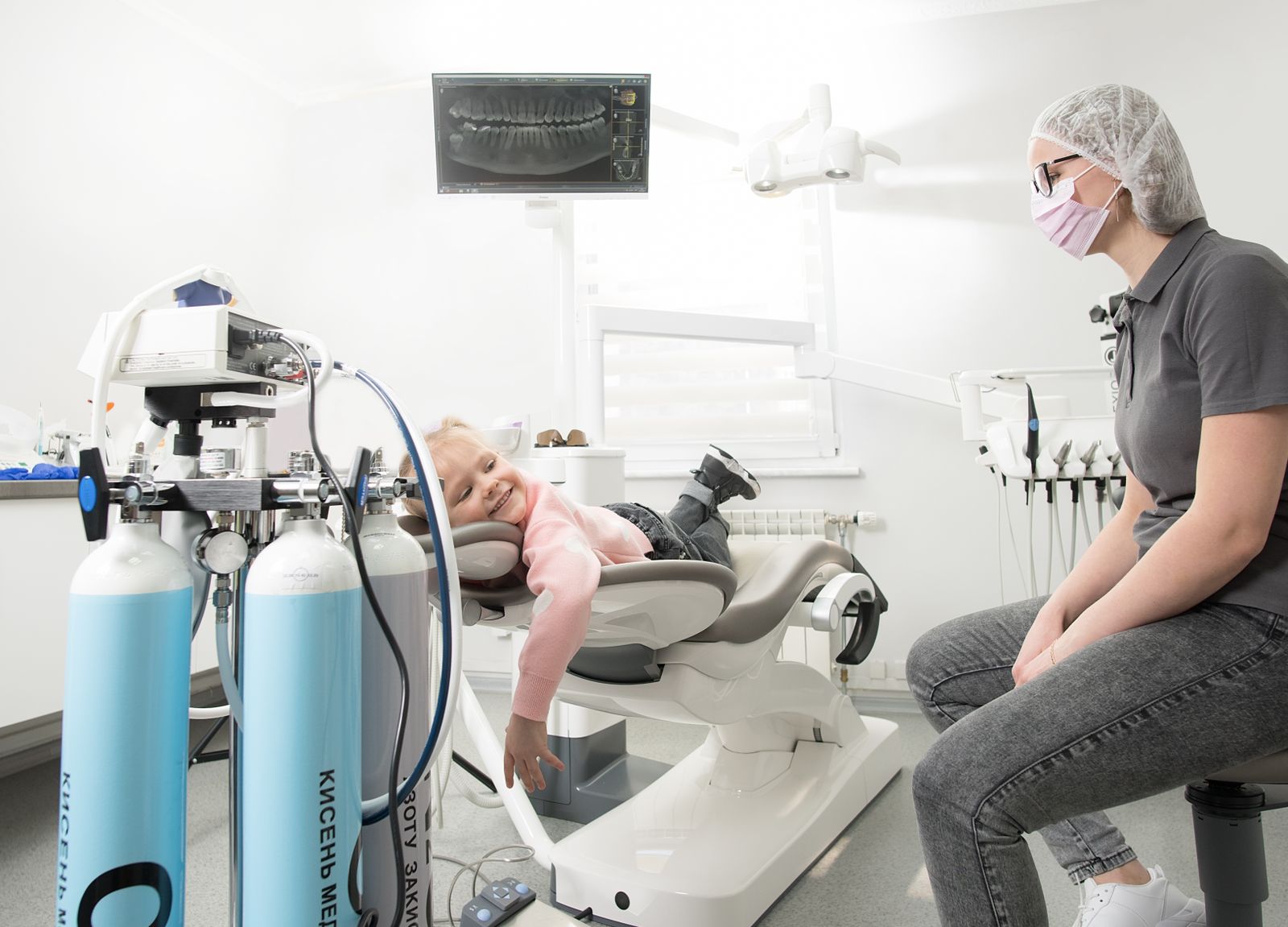
What I actually do — and do not do — at a child's first dental appointment, and why the first visit should happen by the first birthday, not the fourth.
A 14-month-old came in last Tuesday on her mother's lap. She had four upper incisors, two lower, and a small white-spot lesion on the upper left central — the first sign of early childhood caries from overnight bottle feeding. We did not lay her flat. We did not use a drill. We counted her teeth, polished them with a soft brush, and her mother left with a feeding plan and the right toothpaste.
That is a first dental visit done right.
When the first visit should happen
The American Academy of Pediatric Dentistry, and the European equivalent EAPD, both recommend the first dental visit by the eruption of the first tooth or by 12 months of age — whichever comes first. Not at three. Not at five. By the first birthday.
The reason is not the teeth. The reason is the feeding habits, the fluoride exposure and the parental anxiety. By the time most families bring a four-year-old to me with toothache, the child has already learned that dentists mean pain. That association is hard to rewrite.
What we do in that first 20 minutes
I keep the first visit short and predictable. Same room, same chair, same nurse if possible. The child sits on the parent's lap for the under-threes — a knee-to-knee position with me opposite the parent works beautifully. I count the teeth out loud, show the parent any soft tissue findings, and use a small mirror as a play tool first.
If there is no pathology, the appointment ends with a soft brush polish and a topical fluoride varnish — 22,600 ppm sodium fluoride is the standard concentration, painted on with a microbrush, sets in 60 seconds, and the child can eat 30 minutes later. The Cochrane systematic review on fluoride varnish in children, updated in 2013, showed a meaningful reduction in caries increment in primary teeth.
The toothbrushing conversation parents actually need
Most parents are doing two things wrong, and they are easy to fix.
- The child is brushing alone. Children under seven do not have the manual dexterity to brush effectively. The parent should brush, the child can join in
- The toothpaste is wrong. Under three: a smear of 1,000 ppm fluoride toothpaste, no bigger than a grain of rice. Three to six: a pea-sized amount of 1,000 to 1,450 ppm. Spit, don't rinse
The bottle and the sippy cup
If a baby falls asleep with a bottle of milk or juice in their mouth, the sugar pools around the upper incisors all night. Saliva flow drops in sleep. The result is the classic crescent of decay on the labial of the upper front teeth — early childhood caries. By the time it shows as brown, we are already restoring or extracting.
So we talk about water-only at night, weaning off the bottle by 12 to 15 months, and switching sweetened milks for plain. This is the part of the visit that takes the longest, and it matters more than anything I do with an instrument.
What I do not do at the first visit
I do not take radiographs unless there is a clinical indication — a visible cavity, trauma, or a swelling. I do not separate the child from the parent. I do not promise the child it will not hurt, because the first visit should not hurt, and making promises sets up the next visit to fail.
What insurance covers in Sharjah
Most Daman and Thiqa basic plans cover paediatric examinations and fluoride application for children under 12. A first visit at our clinic is typically AED 250 to AED 400 if paid privately, and frequently covered in full by basic plans with a referral. We pre-check eligibility before the appointment so the parent is not surprised at reception.
A note for nervous parents
Children read the parent's body language faster than they hear words. If you walk in tense, your child walks in tense. I often ask one parent to come without the other for the first visit if the second parent is the more anxious one. It works. You can read more about how we structure paediatric care on our paediatric services page, or come and meet me in clinic — I see children every week.
For complex cases, behaviour-management issues, or children with special needs, we coordinate across the team. I personally walk every new paediatric family through what to expect at visit two so there are no surprises.
 About the authorDr. Hajir Abdullah Al-KhazrajiGeneral Dentist · aiHealth Medical Center · Sharjah, UAEPediatric DentistryGeneral DentistryPreventive CarePatient-Journey CoordinationView profile →
If your child has not yet had a first dental visit, or the last one did not go well, Book a consultation at aiHealth Medical Center in Sharjah.
Read more articles on the dental health blog, or book an appointment.