All-on-X in Sharjah: when a full-arch implant case actually makes sense

Full-arch implant rehabilitation is one of the most over-marketed and under-planned procedures in the UAE. Here is when it is the right call — and when it is not.
A patient walks into the clinic with a panoramic radiograph in his hand. He has been told by three different providers that he needs "All-on-4" on the upper arch. Two of the three did not take a CBCT. One quoted him AED 38,000. Another quoted AED 95,000. He wants to know what is real.
This is the most common consultation I see in the Sharjah and Ajman corridor. Full-arch implant work — sold under names like All-on-4, All-on-6, or All-on-X — has become the headline procedure of the UAE dental market. It can be life-changing. It can also be the wrong answer to the right question. The difference is almost always in the planning, not the execution.
What "All-on-X" actually means
The protocol Brånemark and Maló developed (Maló et al., Clin Implant Dent Relat Res, 2003) places four to six implants in a single arch, often with the distal implants tilted up to 45 degrees to engage cortical bone and avoid the maxillary sinus or the inferior alveolar nerve. A rigid full-arch prosthesis is then screwed onto multi-unit abutments — either the same day (immediate load) or after osseointegration. The "X" in All-on-X simply means "however many implants the bone, the bite force, and the prosthetic plan actually require." At aiHealth Medical Center we routinely place four, five, or six implants per arch depending on what the CBCT and the opposing dentition tell us.
Our workhorse systems for these cases are Straumann BLT for predictable cortical engagement and Neodent (Straumann Group) for the longer tilted distal positions. For severely resorbed maxillae where standard implants will not anchor, we move to subperiosteal or zygomatic-supported designs — a separate conversation, but worth knowing the option exists.
 CBCT-driven planning is non-negotiable for full-arch cases — the difference between a 10-year prosthesis and a 2-year revision.
When it is the right call
Full-arch implant rehab is the right answer when three conditions are met. First, the existing dentition is no longer restorable in a way that respects the patient's budget and biology — generalized severe periodontitis with grade III mobility on most teeth, or a maxilla with multiple failed endodontic and prosthodontic attempts. Second, the patient understands and accepts that this is a prosthetic rehabilitation that demands lifelong maintenance, not a one-time procedure. Third, the bone, the opposing arch, and the smile line allow a screw-retained prosthesis to be delivered without compromising lip support or phonetics.
When all three are present, the literature is very kind to this approach. Maló's 10-year outcomes data shows cumulative implant survival above 94% with appropriate case selection. The ITI Consensus reports comparable numbers when tilted distal implants are used in atrophic maxillae.
When it is the wrong call
It is the wrong call when a patient has 8 to 10 strategic teeth that can be saved with periodontal therapy, endodontic retreatment, and individual crowns or short-span bridges. Extracting teeth that could have been kept — for the sake of "going implant" — is the most common avoidable mistake I correct in my Sharjah practice. It is also the wrong call when bone volume in the posterior maxilla is genuinely inadequate and the team is unwilling to do the sinus lift or to switch to a longer tilted implant. Planting four implants where five or six are biomechanically indicated, because the marketing material says "All-on-4," produces prostheses that fracture and screws that loosen.
 The number of implants is dictated by bite force and prosthetic span, not by the brochure on the wall.
What this means for a patient in Sharjah
If someone has quoted you full-arch work without a CBCT, a diagnostic wax-up or digital smile design, and a frank conversation about whether your existing teeth could be saved, you are not being planned — you are being sold. AED 30,000 to AED 120,000 per arch is a wide and honest range in the UAE, and the spread is almost entirely about case complexity, the implant brand, and the prosthetic material (PMMA conversion versus zirconia hybrid versus monolithic zirconia). Daman and Thiqa do not currently reimburse implants, so this is an out-of-pocket conversation that deserves a second opinion every single time.
About the author
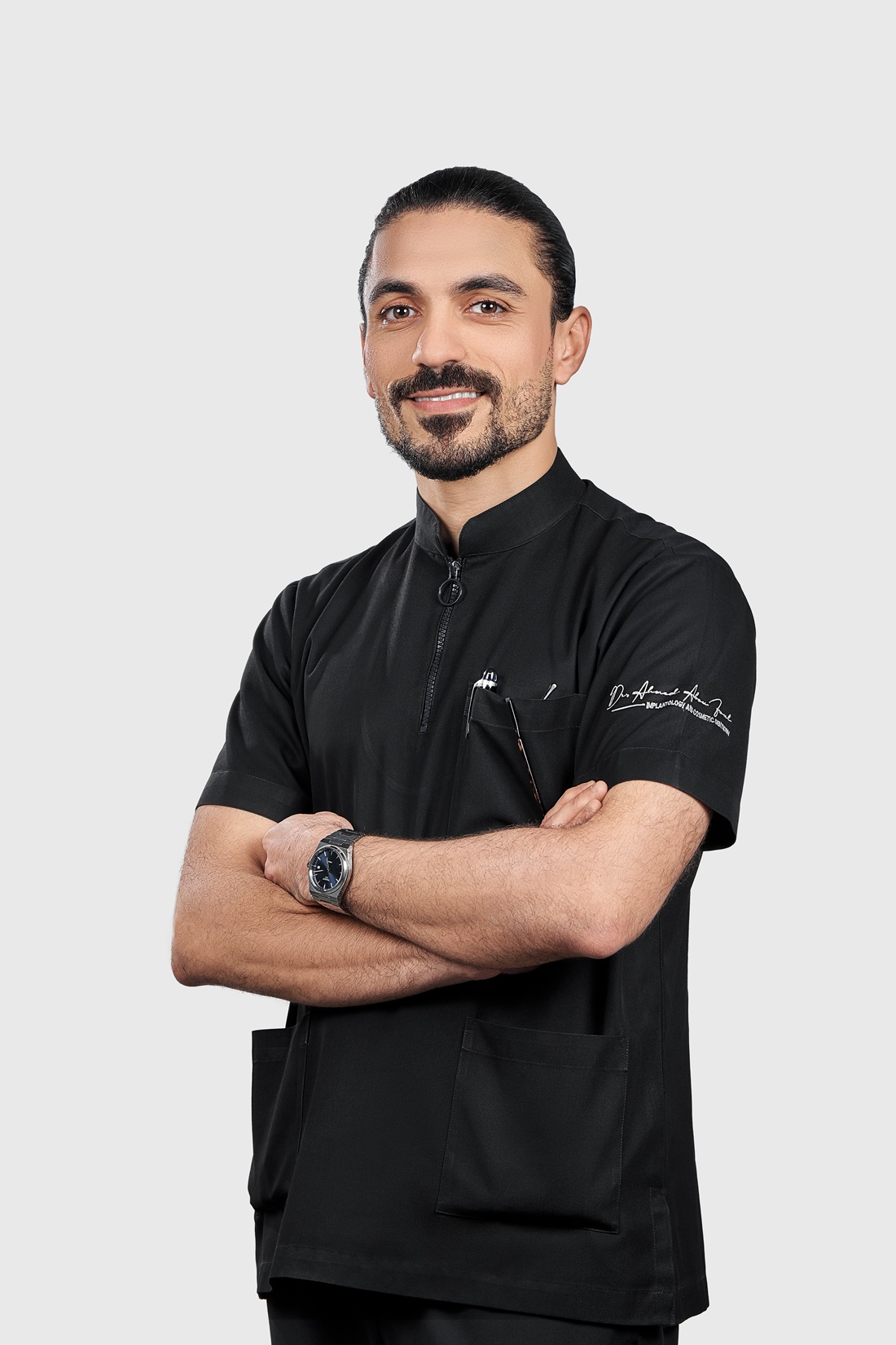
Dr Ahmed Abou Foul
Specialist Periodontist · aiHealth Medical Center
ImplantsPerioBone graftingFull-archView profile →Read more articles on the dental health blog, or book an appointment.